Sewing Machines
The Best Heavy Duty Sewing Machines for Denim, Canvas and More
 By James WhitfieldReviews editor
Home machines that cope with denim and canvas — judged on frame, feed and presser-foot lift, not the badge on the box.
Our top picks at a glance
| Model | Pick | Type | Stitches | Max speed | Price band | Check price |
|---|---|---|---|---|---|---|
| Best overall | Mechanical | 18 | — | Premium | ||
| Best value | Mechanical | 32 (110 apps) | Up to 1,100 spm | Mid-range | ||
| Best computerized heavy duty | Computerized | 100 | Up to 1,100 spm | Mid-range | ||
| Alternative computerized | Computerized | — | — | Mid-range | ||
| Thick layers, straight stitch only | Straight-stitch | 1 (straight) | Up to 1,500 spm | Premium | ||
| Lighter-duty mixed sewing | Computerized | 70 | Up to 750 spm | Mid-range |
What ‘heavy duty’ really means on a home machine
Frame
A metal frame (or die-cast bed language) is a better starting signal than “heavy duty” printed on the carton. Plastic housings can still hide useful metal structure, so read the manufacturer wording and owner complaints together.
Motor and speed
Higher stitches-per-minute claims help when you want to move through long denim seams, but speed without feed control just makes bad seams faster. Pair speed figures with how the machine is positioned for thick fabric.
Feed dogs and walking foot
Thick layers shift. A walking foot or even-feed foot keeps the top and bottom moving together. Some machines include that foot; others expect you to add it. For quilting sandwiches that behave like thick stacks, also see best sewing machines for quilting.
Presser-foot lift and clearance
Extra-high presser-foot lift is one of the clearest “can I get this under the foot?” specs. The Janome HD3000 calls this out explicitly. If the maker is silent, treat clearance as unknown.
Needles and thread for thick fabric
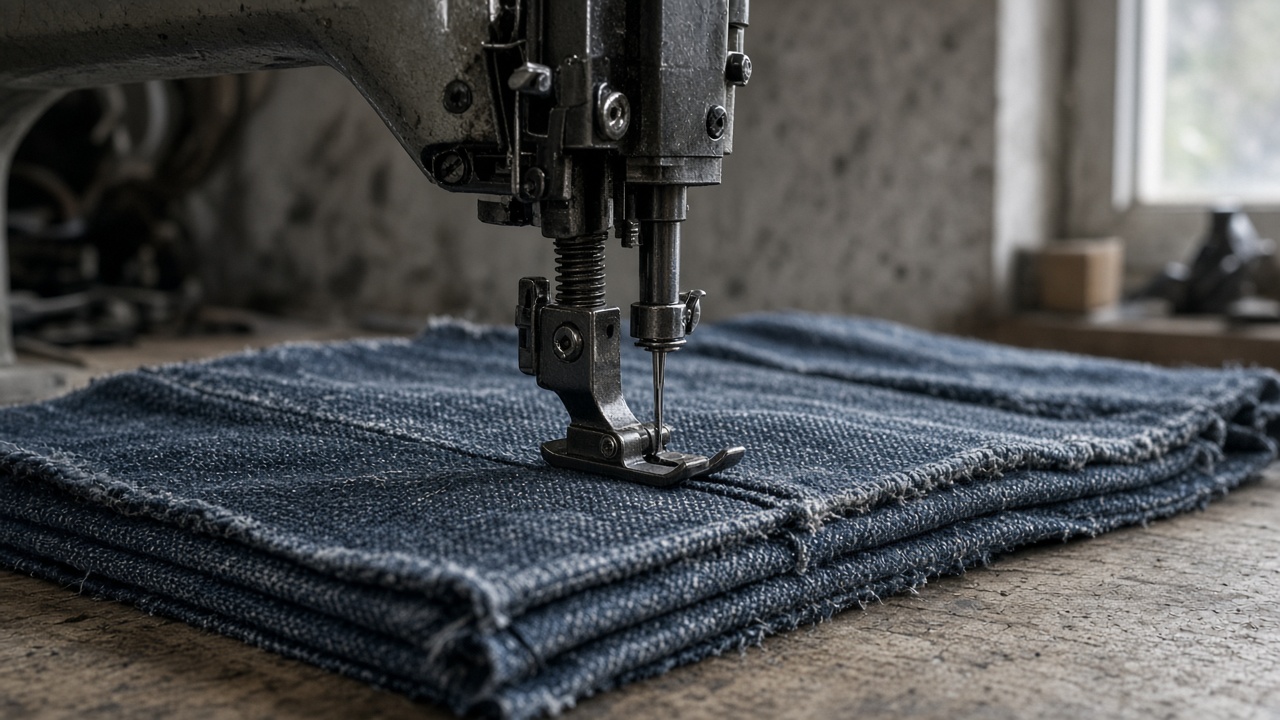
A jeans or denim needle, the right thread weight and a longer stitch length matter as much as the motor. Skipped stitches on denim are often a needle problem first.
The best heavy duty sewing machines, reviewed
Best overall
Janome HD3000
Best overall
Janome HD3000 (opens Amazon in a new tab)
Best for: Sewists who want a mechanical metal-frame machine for denim, canvas and thick quilt sandwiches
- Built-in stitches: 18Source
- Buttonhole: 1-stepSource
- Stitch size: 6.5 mm max width / 4 mm max lengthSource
- Needle threader: Built-inSource
- Presser-foot lift: Extra-highSource
- Case: Hard caseSource
Pros
- Mechanical simplicity with an extra-high presser-foot lift
- Snap-on feet and built-in needle threader
- Hard case included per published specs
Cons
- Premium band versus budget heavy-duty options
- Only 18 built-in stitches
Skip it if: You need embroidery or a huge decorative stitch menu
What owners mention
Praise
- solid mechanical feel
- handles thicker projects calmly
Complaints
- costs more than entry heavy-duty models
- few decorative stitches
The HD3000 is the pick when you want a mechanical machine with an extra-high presser-foot lift, snap-on feet, a built-in needle threader and a hard case on published specs. Eighteen stitches keep the panel honest. It sits in the premium band, which is the trade for a simpler, thicker-fabric tool versus a long decorative menu.
Best value
Best value
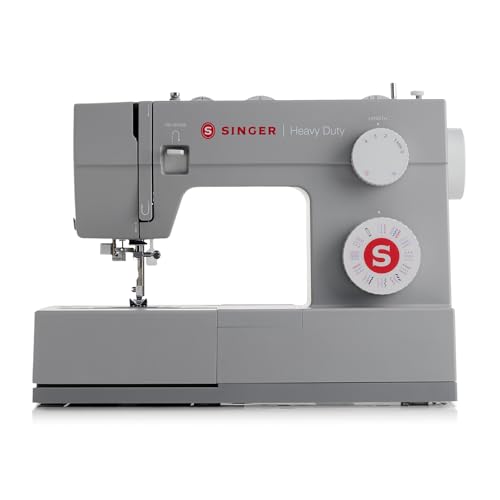
Singer Heavy Duty 4452 (opens Amazon in a new tab)
Best for: Beginners and home sewists who plan to sew denim, canvas and other thicker fabrics
- Built-in stitches: 32 stitches / 110 stitch applicationsSource
- Max speed: Up to 1,100 spmSource
- Needle threader: AutomaticSource
- Buttonhole: 1-stepSource
- Power claim: Singer claims 50% more power (Singer wording)Source
Pros
- High claimed speed for a home heavy-duty machine
- More stitch applications than the basic Heavy Duty sibling
- Automatic needle threader and one-step buttonhole
Cons
- Owners sometimes mention tension or timing issues after heavy use
- Some reviewers call out internal plastic parts despite the metal-frame marketing
Skip it if: You want a wide quilting table and walking foot as standard inclusions
What owners mention
Praise
- power for denim
- fast sewing when set up well
Complaints
- tension/timing after heavy use
- plastic parts inside despite heavy-duty branding
The Singer Heavy Duty 4452 is the value pick for denim and canvas on a home budget. Singer lists thirty-two stitches delivering one hundred ten stitch applications, up to 1,100 spm, an automatic needle threader and a one-step buttonhole, and Singer’s copy claims fifty percent more power — that claim is Singer’s. Owners often praise power for denim; some report tension or timing issues after heavy use and call out internal plastic parts. Compare it directly with its sibling on Singer 4423 vs 4452.
Best computerized heavy duty
Best computerized heavy duty
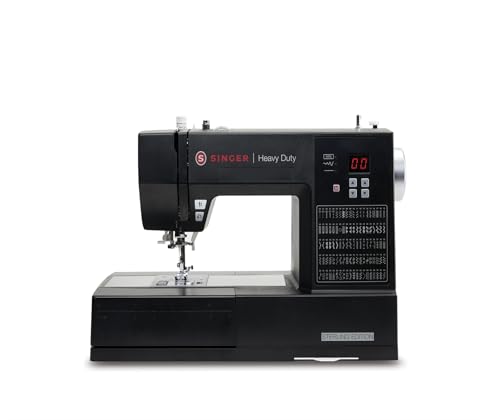
Singer HD6600C (opens Amazon in a new tab)
Best for: Home sewists who want computerized Heavy Duty features with a large stitch menu
- Built-in stitches: 100Source
- Max speed: Up to 1,100 spmSource
- Display: LCDSource
- Buttonhole: 1-stepSource
- Lighting: LEDSource
Pros
- 100 built-in stitches
- High claimed speed with LCD selection
- One-step buttonhole and LED lighting on the listing
Cons
- Specs here are listing-level and should be confirmed on Singer.com
- More complexity than a first mechanical machine
Skip it if: You prefer a simple mechanical dial and fewer options
What owners mention
Praise
- stitch variety with speed
- LCD convenience
Complaints
- menu learning curve
- mixed durability stories on heavy work
The HD6600C brings LCD selection, one hundred stitches, up to 1,100 spm, a one-step buttonhole and LED lighting on listing-level details. Choose it when you want Heavy Duty positioning plus a larger stitch menu. Confirm full specs on Singer.com before you buy for a specific feature checklist.
Alternative computerized
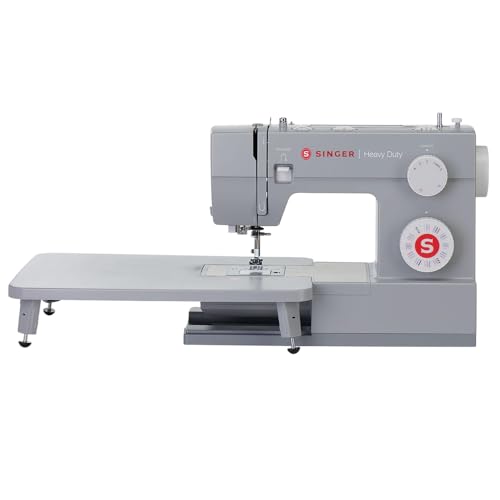
Alternative computerized
Singer HD6380 (opens Amazon in a new tab)
Best for: Sewists who want a computerized Singer Heavy Duty once full specs are confirmed on Singer.com
- Machine type: Heavy Duty computerizedSource
Pros
- Computerized Heavy Duty positioning from Singer
- Fits buyers who want LCD-style selection in the Heavy Duty line
Cons
- Detailed public specs still need a full Singer.com pull
- Not the simplest machine for absolute beginners
Skip it if: You need a fully documented spec sheet before deciding
What owners mention
Praise
- modern controls on a heavy-duty framed machine
Complaints
- spec details vary by listing
- heavier learning curve than mechanical siblings
The HD6380 is another computerized Heavy Duty option in Singer’s line. Public detail in our product set is thinner, so treat it as an alternative to investigate on Singer.com rather than as a fully documented twin of the HD6600C.
Thick layers, straight stitch only
Juki TL-2010Q
Thick layers, straight stitch only
Juki TL-2010Q (opens Amazon in a new tab)
Best for: Quilters and sewists who want fast, precise straight seams through thick layers
- Stitch type: Straight stitch onlySource
- Speed: 200–1,500 spm speed sliderSource
- Max stitch length: 6 mmSource
- Extras: Thread trimmer, knee lifter, drop feedSource
- Table: 23" x 13" auxiliary tableSource
- Weight: 25.4 lb; aluminum die-castSource
Pros
- Very high speed range with a speed slider
- Automatic thread trimmer and knee lifter
- Large auxiliary table and even-feed foot included
Cons
- Straight stitch only — no zigzag or buttonhole
- Heavier and pricier than a general-purpose beginner machine
Skip it if: You need zigzags, buttonholes or decorative stitches on the same machine
What owners mention
Praise
- speed and straight-line accuracy
- handles thick stacks
Complaints
- one stitch type only
- size and weight for small spaces
The TL-2010Q is not a zigzag machine. It is a straight-stitch workhorse with a 200–1,500 spm speed slider, thread trimmer, knee lifter, drop feed and a large auxiliary table on Juki’s page. If your heavy work is mostly straight seams through thick stacks, it belongs on this list. If you need buttonholes on the same machine, look elsewhere.
Lighter-duty all-rounder for mixed sewing
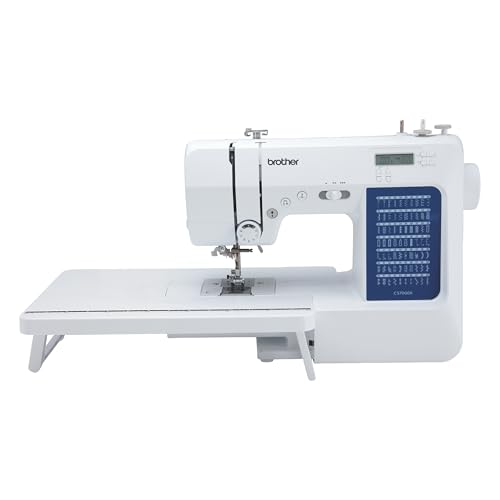
Lighter-duty all-rounder
Brother CS7000X (opens Amazon in a new tab)
Best for: Beginners and new quilters who want a walking foot, wide table and speed control in one box
- Built-in stitches: 70Source
- Buttonholes: 7 one-step auto-sizeSource
- Included feet: 10, including walking foot and 1/4" piecing footSource
- Max speed: Up to 750 spm with speed controlSource
- Stitch size: 7 mm max width / 5 mm max lengthSource
- Warranty: 25-year limitedSource
Pros
- Automatic needle threader and drop-in bobbin
- Walking foot, 1/4" foot, quilt guide and wide table included
- Speed control plus drop feed for free-motion
- Hard cover and metal frame on Brother's spec sheet
Cons
- Owners sometimes report durability issues over time
- Some mention needle breaks or skipped stitches with heavier use
- Not the strongest choice for daily denim stacks
Skip it if: You sew heavy canvas or leather every day and need a true heavy-duty mechanical
What owners mention
Praise
- stitch variety
- beginner-friendly setup
- strong value for the feature set
Complaints
- durability concerns over time
- needle breaks or skipped stitches for some owners
The CS7000X is here with a warning label. It is an excellent mixed-sewing and beginner/quilting kit — walking foot, wide table, speed control — but it is not the strongest daily denim or canvas tool on this page. Use it when heavy fabric is occasional and you still want decorative stitches and free-motion options. For everyday thick seams, prefer the HD3000, 4452 or TL-2010Q. Broader category winners live on best sewing machines.
Singer 4423 — prose only until verified
The Singer Heavy Duty 4423 sits in the same series as the 4452 and is often shopped for basic mending and hems. We are not rendering a product box or buy button until the classic grey Amazon listing and Singer.com specs are confirmed — the Amazon listing we found was a Meltwater Blue colorway. Do not trust third-party stitch counts until that check is done. Full sibling comparison: Singer 4423 vs 4452. Brand context: Brother vs Singer.
Can a home sewing machine sew leather?
Yes for thin garment leather, with a leather needle, suitable thread, longer stitches and often a roller or walking foot. No for saddle, belt and upholstery leather as a default expectation — that work usually needs an industrial walking-foot machine. A “heavy duty” badge on a domestic box does not change the physics of thick hide.
Heavy duty vs industrial sewing machines
Home heavy-duty machines are still domestic tools: portable, household voltage, designed for intermittent thick work. Industrial machines are built for long runs, often with a dedicated walking foot, clutch or servo motor and a table mount. If you run a repair shop or sew leather goods daily, budget for industrial. If you hem jeans and sew canvas totes at home, a capable domestic pick from this list is the realistic lane.
Sources and last checked5 sources
- Janome site · checked
- Singer Heavy Duty 4452 product page · checked
- Singer site · checked
- Juki TL-2010Q product page · checked
- Brother CS7000X product page · checked
FAQ
Is the Singer Heavy Duty actually heavy duty?
It depends what you mean. Owners often like the power for denim hems and tote bags, and Singer markets higher speed and more power on models such as the 4452. Some owners also report internal plastic parts and timing problems after heavy use. Treat the name as a product line, not a guarantee of industrial strength.
Can a heavy duty machine sew leather?
Thin garment leather can work with a leather needle, longer stitch length and the right foot on a capable home machine. Saddle, belt and upholstery leather usually need an industrial walking-foot machine. If leather is your main material, do not expect a domestic Heavy Duty badge to replace that tool.
What needle should I use for denim?
Use a denim or jeans needle in a size matched to the fabric weight, and change it as soon as stitches skip. Pair it with a walking foot or even-feed foot when you stack thick seams. The wrong needle is a common reason people blame the machine for skipped stitches.
Is the Janome HD3000 worth the extra money?
If you sew thick layers often and want a mechanical machine with an extra-high presser-foot lift and a short, honest stitch list, the premium band can make sense. If you only hem jeans once a season, a value Heavy Duty model may be enough. Pay for clearance and feed you will use weekly.
Mechanical or computerized for heavy fabrics?
Mechanical machines keep controls simple and are easy to understand under thick stacks. Computerized Heavy Duty models add stitch menus and LCD selection, which helps if you still want decorative options. For pure denim and canvas utility work, many sewists prefer a mechanical pick first.
About the SewPicks editors
SewPicks is written by named editors who compare sewing, quilting and embroidery machines from manufacturer specs and patterns in owner reviews. We do not run physical product trials. Our picks change when models are discontinued or better options appear.
- James WhitfieldReviews editor
 Maya ChenEditor-in-chief
 Rachel TorresQuilting & embroidery editor
Meet the full team on Authors & Editors, or read How We Choose.