Sewing Machines
The Best Sewing Machines for Beginners in 2026
 By Maya ChenEditor-in-chief
Clear beginner picks from manufacturer specs and patterns in owner reviews — not physical product trials.
Our top picks at a glance
| Model | Pick | Stitches | Speed control | Needle threader | Warranty | Price band | Check price |
|---|---|---|---|---|---|---|---|
| Best overall for beginners | 70 | Yes | Automatic | 25-year limited | Mid-range | ||
| Best budget | 37 | — | — | — | Budget | ||
| Most stitches on a budget | 110 | — | — | — | Budget | ||
| Best simple computerized | 60 | — | — | 25-year limited | Budget | ||
| Best for heavier fabrics | 32 (110 applications) | — | Automatic | — | Mid-range |
How we chose these beginner machines
- Easy threading: automatic needle threader and a drop-in bobbin when the maker lists them.
- Speed control: a slider or a pedal that lets you sew slowly while you learn.
- Useful stitches over stitch counts: a one-step buttonhole and solid utility stitches beat a wall of decorative icons.
The best sewing machines for beginners, reviewed
Best overall for beginners
Best overall for beginners
Brother CS7000X (opens Amazon in a new tab)
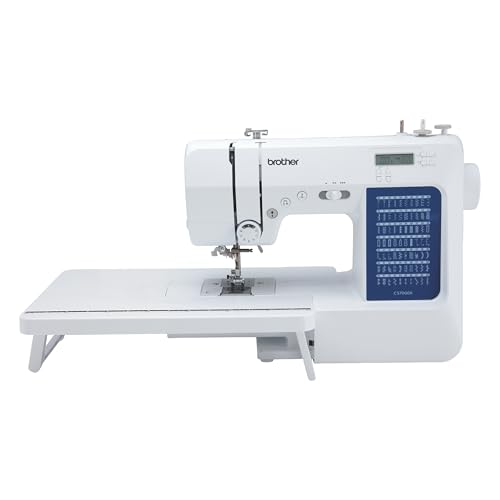
Best for: Beginners and new quilters who want a walking foot, wide table and speed control in one box
- Built-in stitches: 70Source
- Buttonholes: 7 one-step auto-sizeSource
- Included feet: 10, including walking foot and 1/4" piecing footSource
- Max speed: Up to 750 spm with speed controlSource
- Stitch size: 7 mm max width / 5 mm max lengthSource
- Warranty: 25-year limitedSource
Pros
- Automatic needle threader and drop-in bobbin
- Walking foot, 1/4" foot, quilt guide and wide table included
- Speed control plus drop feed for free-motion
- Hard cover and metal frame on Brother's spec sheet
Cons
- Owners sometimes report durability issues over time
- Some mention needle breaks or skipped stitches with heavier use
- Not the strongest choice for daily denim stacks
Skip it if: You sew heavy canvas or leather every day and need a true heavy-duty mechanical
What owners mention
Praise
- stitch variety
- beginner-friendly setup
- strong value for the feature set
Complaints
- durability concerns over time
- needle breaks or skipped stitches for some owners
The CS7000X shows up repeatedly when beginners want one box that covers garments and early quilting. Brother’s product page lists a walking foot, quarter-inch piecing foot, quilt guide, detachable wide table and hard cover alongside seventy stitches. Drop feed is there when you are ready for free-motion practice. For a wider market view, see our main guide on best sewing machines. Deeper dive: Brother CS7000X review.
Best budget
Best budget
Brother GX37 (opens Amazon in a new tab)
Best for: Beginners who want a simpler budget machine with a short, useful stitch list
Pros
- Thirty-seven stitches keep choices manageable
- Six included feet cover basic garment tasks
- Lower complexity than feature-heavy computerized kits
Cons
- Fewer published advanced quilting accessories than CS7000X
- Not aimed at heavy canvas stacks
Skip it if: You already know you want a wide table and walking foot in the first box
What owners mention
Praise
- easy to learn
- good starter feature set
Complaints
- some outgrow it quickly
- limited for thick layers
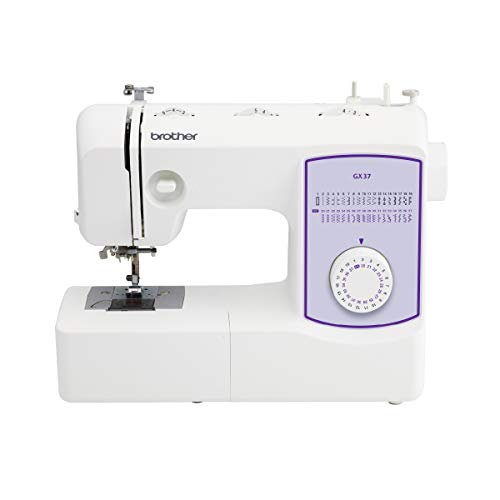
The GX37 keeps the decision load low: thirty-seven stitches and six feet on Brother’s page. It is the pick when you want to learn threading, tension and straight seams without paying for a full quilting kit you might not use yet.
Most stitches on a budget
Most stitches on a budget
Brother CE1155 (opens Amazon in a new tab)
Best for: Budget sewists who want a long stitch list without stepping into mid-range kits
Pros
- 110 built-in stitches on a budget band machine
- Metal frame called out on the listing
- Computerized selection for decorative options
Cons
- Public spec sheet details are thinner than flagship Brother pages
- Stitch count alone does not equal easier sewing
Skip it if: You care more about included quilting feet than raw stitch count
What owners mention
Praise
- lots of stitch options for the money
- fine for light garment and craft sewing
Complaints
- mixed feedback on long-term feel
- not ideal as a denim workhorse
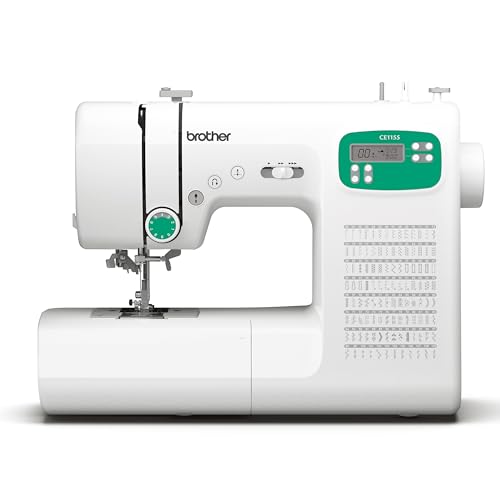
The CE1155 is for sewists who want a long decorative menu without leaving the budget band. Brother’s listing highlights one hundred ten stitches and a metal frame. Remember that stitch count is not the same as ease — use the extras after the utility stitches feel automatic.
Best simple computerized
Best simple computerized
Brother CS5055 (opens Amazon in a new tab)
Best for: Beginners who want a simple computerized machine without a huge stitch menu
Pros
- Straightforward computerized stitch selection
- Sixty built-in stitches without an overwhelming panel
- 25-year limited warranty on Brother's product page
Cons
- Fewer published accessory details than the CS7000X
- Not positioned as a heavy-fabric machine
Skip it if: You need a quilting kit or walking foot in the box on day one
What owners mention
Praise
- simple controls
- approachable for first-time sewists
Complaints
- some wish for more included feet
- light build for thick seams
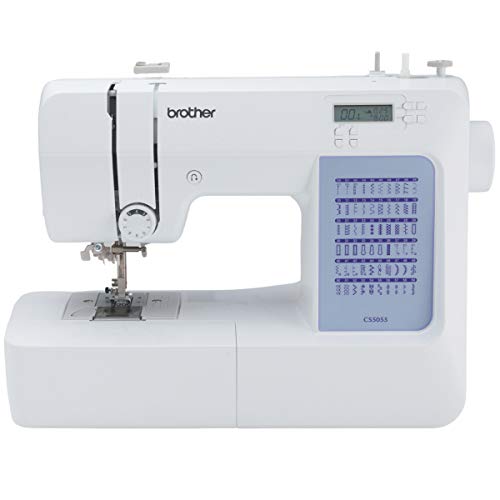
The CS5055 sits between a basic mechanical and a loaded quilting kit. Sixty stitches and a computerized selector give you push-button control with a 25-year limited warranty on Brother’s product page, without the CS7000X accessory stack.
Best for heavier fabrics
Best for heavier fabrics
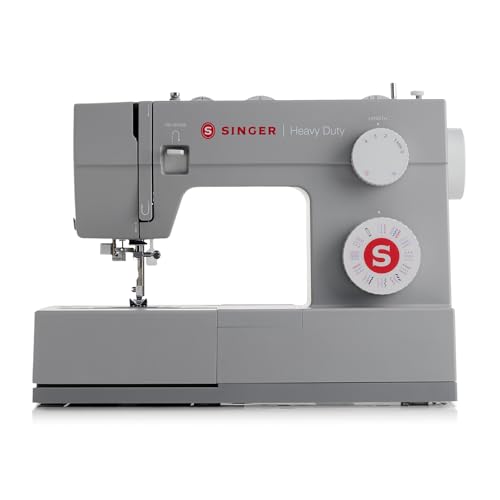
Singer Heavy Duty 4452 (opens Amazon in a new tab)
Best for: Beginners and home sewists who plan to sew denim, canvas and other thicker fabrics
- Built-in stitches: 32 stitches / 110 stitch applicationsSource
- Max speed: Up to 1,100 spmSource
- Needle threader: AutomaticSource
- Buttonhole: 1-stepSource
- Power claim: Singer claims 50% more power (Singer wording)Source
Pros
- High claimed speed for a home heavy-duty machine
- More stitch applications than the basic Heavy Duty sibling
- Automatic needle threader and one-step buttonhole
Cons
- Owners sometimes mention tension or timing issues after heavy use
- Some reviewers call out internal plastic parts despite the metal-frame marketing
Skip it if: You want a wide quilting table and walking foot as standard inclusions
What owners mention
Praise
- power for denim
- fast sewing when set up well
Complaints
- tension/timing after heavy use
- plastic parts inside despite heavy-duty branding
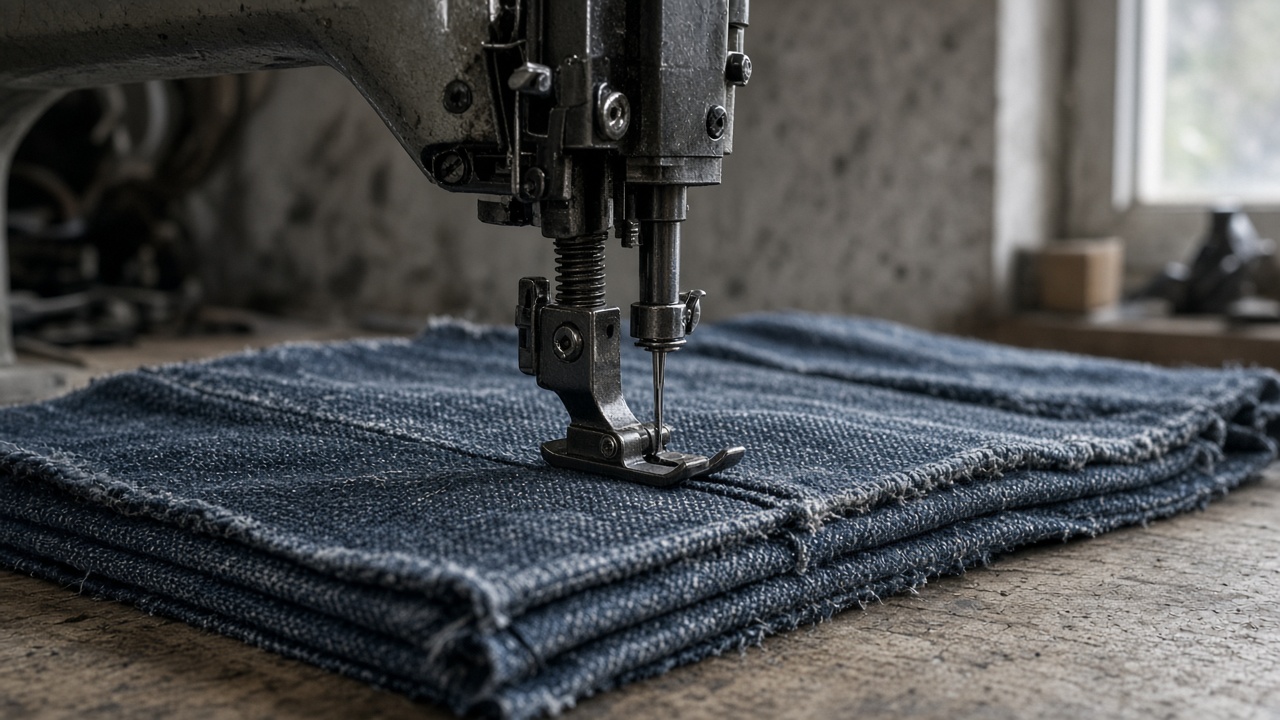
If your first projects already include jeans hems or tote bags, the Singer Heavy Duty 4452 is the beginner-friendly heavy option on this list. Singer publishes thirty-two stitches delivering one hundred ten stitch applications, up to 1,100 spm, an automatic needle threader and a one-step buttonhole, and Singer’s own copy claims fifty percent more power — treat that as Singer’s claim, not a lab measurement. Compare siblings on Singer 4423 vs 4452 and see the wider thick-fabric short list on best heavy duty sewing machines.
Brother XM2701 — popular, but verify the listing
The Brother XM2701 has been a long-time beginner bestseller. Brother’s product page lists twenty-seven stitches (sixty-three stitch functions), a one-step buttonhole, six feet, an automatic needle threader, drop-in bobbin, LED light, free arm, up to 800 spm and a 25-year limited warranty. At our last check the base Amazon listing showed no featured offers, while bundles were in stock — so we are not rendering a buy button until the Amazon listing is confirmed. If you like this feature set, compare it against the GX37 and CS7000X above while you wait for a clean listing.
What a beginner sewing machine really needs
Automatic needle threader
Threading is where many first sessions stall. A built-in needle threader does not make you a better sewist, but it removes a fiddly step so you spend time sewing seams instead of squinting at the eye of the needle.
Drop-in bobbin
Top-loading drop-in bobbins are easier to see and seat than many front-loading systems. When the maker also includes a clear cover, you can spot an empty bobbin before it ruins a seam.
Speed control or a gentle foot pedal
Slow sewing is accurate sewing while you learn. A speed limiter (as on the CS7000X) or a pedal you can feather helps you pivot corners and stop before the edge of the fabric.
Free arm
Slip cuffs, sleeves and trouser hems over a free arm instead of fighting a flat bed. Almost every serious beginner project list includes at least one tubular hem.
One-step buttonhole
A one-step (auto-size) buttonhole keeps both sides even. Multi-step buttonholes are teachable, but they are a poor place to practice patience on a shirt you care about.
Metal frame and warranty
A metal frame does not guarantee a lifetime of denim, but it is a better starting signal than an all-plastic toy machine. Read the warranty language on the manufacturer page — Brother’s 25-year limited wording on several models here is a useful benchmark, not a quality score by itself.
Mechanical or computerized for your first machine?
Mechanical machines use dials and levers. They are simple to understand and often cheaper to service conceptually. Computerized machines store stitches in a panel or LCD and can include helpers like automatic reverse patterns. Neither type is “more beginner” by default — match the controls to your patience for menus. If you want a full explainer later, see
for a dedicated comparison when it publishes. Brand differences also matter; skim Brother vs Singer when you are deciding between ecosystems.
Beginner mistakes to avoid
Skip mini or handheld machines as your first real tool. They rarely teach standard free-arm sewing or a proper buttonhole. Do not chase two hundred-plus stitches before you can sew a straight seam with an even seam allowance. And match the needle to the fabric — a universal needle in denim or a dull needle in quilting cotton causes skipped stitches that get blamed on the machine.
If you later sew lots of knits, a serger can finish edges cleanly, but it does not replace this first lockstitch machine — serger vs sewing machine.
Sources and last checked6 sources
- Brother CS7000X product page · checked
- Brother GX37 product page · checked
- Brother CE1155 product page · checked
- Brother CS5055 product page · checked
- Brother XM2701 product page · checked
- Singer Heavy Duty 4452 product page · checked
FAQ
What is the easiest sewing machine for a beginner?
Most beginners do best with a machine that has an automatic needle threader, a drop-in bobbin and some form of speed control. On this short list that profile matches the Brother CS7000X, which also packs a wide table and useful feet. If you want fewer features, the Brother GX37 keeps the stitch list shorter while you learn.
How much should a beginner spend on a sewing machine?
Think in price bands, not fixed dollars. Budget machines cover simple garment and craft sewing. Mid-range kits add tables, extra feet and nicer convenience features. Premium mechanical heavy-duty machines cost more and make sense only if you already know you will sew thick fabrics often.
Is Brother or Singer better for beginners?
It depends on the project. Brother’s CS7000X-style kits emphasize helpers like a needle threader, drop-in bobbin and quilting feet. Singer’s Heavy Duty 4452 is the better first pick when denim and canvas are already on your list. Compare brands in context, not by logo alone.
Are mini sewing machines good for beginners?
Usually not as a first machine. Mini and handheld units struggle with regular garment seams, buttonholes and thicker fabric. A full-size free-arm machine with a one-step buttonhole teaches real skills and is less likely to be replaced within a season of weekly sewing.
What should I sew first?
Start with straight seams on cotton: simple bags, pillowcases or elastic-waist skirts. Practice threading, winding a bobbin and sewing a one-step buttonhole before you jump to stretch knits or several layers of denim. Good habits beat a long stitch menu on week one.
About the SewPicks editors
SewPicks is written by named editors who compare sewing, quilting and embroidery machines from manufacturer specs and patterns in owner reviews. We do not run physical product trials. Our picks change when models are discontinued or better options appear.
 James WhitfieldReviews editor
- Maya ChenEditor-in-chief
 Rachel TorresQuilting & embroidery editor
Meet the full team on Authors & Editors, or read How We Choose.